
HISFF 2025
HISFF 2025 | offered a shift in perspective
While film festivals are often measured by selections, awards, and applause, my experience at the Hyderabad International Short Film Festival (HISFF) unfolded on a more personal and academic plane. It reminded me that cinema exists not only within the frame but also in conversations, in shared silences, in disagreements, and in the gradual shaping of perspective. In addition to being a venue for film screenings, HISFF 2025 was a space of exchange, reflection, and quiet transformation too.
Wikki Allada
SY Intermediate, CEC | Sree Aadhya Academy
As a student filmmaker, I entered the festival with familiar emotions of anticipation, curiosity, and a certain nervous excitement. I hoped to learn something new, perhaps gain validation, or at the very least observe how a professional festival functions. What I did not anticipate was how grounded the experience would feel. HISFF was not intimidating or distant; instead, it was open and accessible. Filmmakers at various stages, students, independent creators, seasoned professionals, critics, and curators occupied the same physical and intellectual spaces. There was no visible hierarchy. Everyone watched the same films, shared opinions freely, and engaged in dialogue as equals. That sense of shared ground was powerful.
One of the most meaningful aspects of HISFF was its emphasis on dialogue rather than validation. The films screened varied widely in form, scale, and execution. Some were technically refined, while others were raw and experimental. Yet, what connected them was intent. Watching these films consecutively reinforced an academic truth often discussed in classrooms but rarely felt so clearly—cinema does not need perfection to be meaningful; it needs clarity of purpose. Each film carried the weight of its maker’s decisions —what to show, what to withhold, and why. This intentionality transformed viewing into an active, critical process rather than passive consumption.
Beyond the screenings, the most significant learning occurred through conversation. Engaging with curators, jury members, critics, and fellow filmmakers offered insight into how films are perceived once they leave the creator’s control. Discussions repeatedly returned to themes of storytelling discipline, clarity of vision, and consistency. These exchanges highlighted that filmmaking is as much an act of communication as it is of creativity, and communication with collaborators, audiences, institutions, and oneself. From an academic standpoint, this reinforced the idea that cinema operates within a larger discourse, shaped by reception as much as by intention.
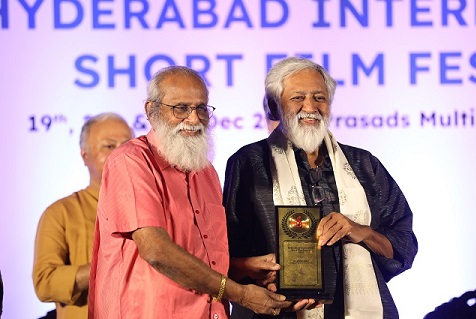
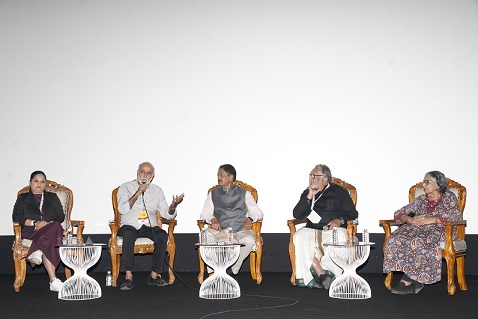
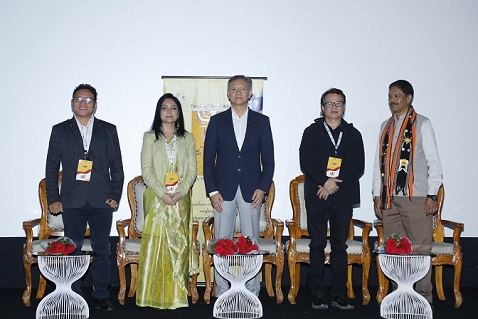
A particularly memorable moment came through a simple yet profound piece of advice shared informally—do not call yourself an aspiring filmmaker; call yourself the future of cinema. Initially, it sounded like encouragement, but its implications were deeper. Language shapes self-perception, and self-perception influences action. This statement challenged the tendency among young creators to position themselves cautiously, almost apologetically. HISFF subtly dismantled that mindset. It suggested that belief in one’s work is not arrogance, but responsibility, and is an essential step forward toward contributing meaningfully to the field.
The festival also emphasized the importance of presence and preparedness. Tiny details, such as the importance of carrying one’s own visiting card, took on symbolic significance. It was not about self-promotion but about acknowledging one’s seriousness toward their craft. From an academic perspective, this aligned with the idea that creative practice is inseparable from professional readiness. Talent alone is insufficient; one must also be prepared to engage, articulate, and represent oneself with clarity.
Observing HISFF as an ecosystem rather than a standalone event was particularly insightful. Festivals bring together creators, audiences, critics, marketers, and institutions into a shared cultural space. As someone interested in both content creation and marketing, this intersection was fascinating. A film’s journey does not end at completion. It begins there. How it is positioned, discussed, and circulated significantly shapes its impact. HISFF demonstrated how festivals function as launch pads for a dialogue around cinema, and not merely as platforms for exhibition.

Talent alone is insufficient; one must also be prepared to engage, articulate, and represent oneself with clarity.
Equally important was the culture of openness that permeated the festival. Senior filmmakers and critics were approachable and generous with their insights. There was little sense of gatekeeping. Instead, the emphasis was on growth, both individual and collective. For young filmmakers, this environment is crucial. It replaces fear with curiosity and competition with community, fostering a healthier relationship with the craft.
The networking that occurred organically throughout the festival was another valuable aspect. Conversations felt genuine rather than transactional. People spoke candidly about their struggles, failures, and the long, uncertain timelines behind their work. This honesty demystified the industry. It became evident that uncertainty is not exclusive to beginners and that it persists at every level. For someone at the beginning of their journey, this realization is both grounding and liberating.
HISFF also reinforced the idea that cinema is evolving not just technologically but structurally too. Short films, digital platforms, and independent voices are no longer peripheral; they are central to contemporary storytelling. Festivals like HISFF acknowledge and nurture this shift. By validating alternative formats and marginalized voices, they actively participate in shaping the future of Indian cinema.
On a personal and academic level, the festival strengthened my resolve. It clarified why I want to make films and why I want to remain engaged with the entire process from ideation to audience response. It reaffirmed that filmmaking is not linear; nor is it a race. It is an ongoing dialogue with time, people, and one’s own evolving perspective. HISFF felt like one meaningful chapter in that larger conversation.
What stayed with me most was not just a single film or panel but the collective energy of the space. A shared belief that stories matter, that voices deserve room, and that cinema is still worth engaging with, critically and passionately. In an era shaped by algorithms and instant gratification, HISFF slowed things down enough to ask essential questions: Why are we telling this story? Who is it for? And what do we want it to leave behind?
As I left the festival, I carried more than inspiration. I carried responsibility, to be disciplined, intentional, and open to learning. HISFF was not an endpoint, but a reminder that growth occurs where curiosity meets effort. It was a privilege to be part of a space that valued both craft and conversation.
For me, the Hyderabad International Short Film Festival wasn’t just another event that I attended. It was an unforgettable experience that recalibrated how I see myself within cinema—not as someone waiting on the side lines but as someone preparing to step forward, equipped with perspective, humility, and purpose.
Photo courtesy: HISFF
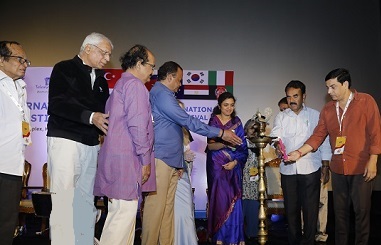
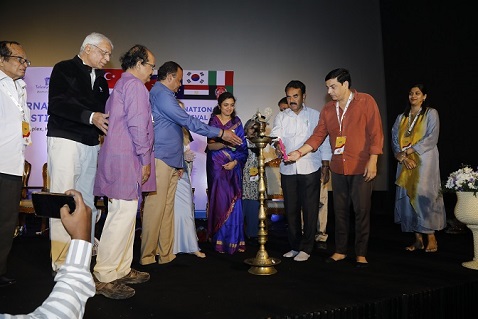
Minister for Roads & Buildings and Cinematography of Telangana, Shri Komatireddy Venkat Reddy; Special Chief Secretary for Youth Advancement, Tourism & Culture, Jayesh Ranjan; and Telangana Film Development Corporation Chairman Dil Raju.
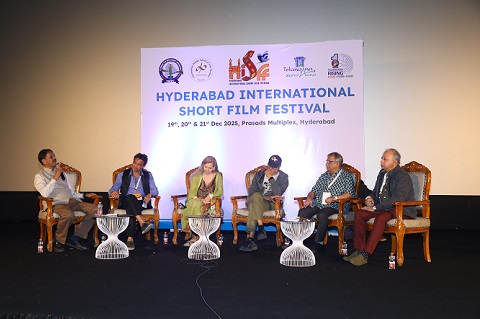
Vijayendra Prasad, Madhu Ambat, Uma Maheshwara Rao, Shashi Kumar, Maithili Rao, Nasser, Nagesh Kukunoor, Utpal Borpujari, Aarti Shreevastava, Lena Das, Sunzu Bachuspatimayu, Alexander Leo Pou, Balaji Aika, Judy Gladstone, Premendra Mazumdar, & Christopher Dalton
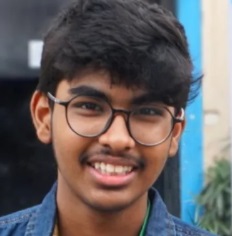
Wikki Allada
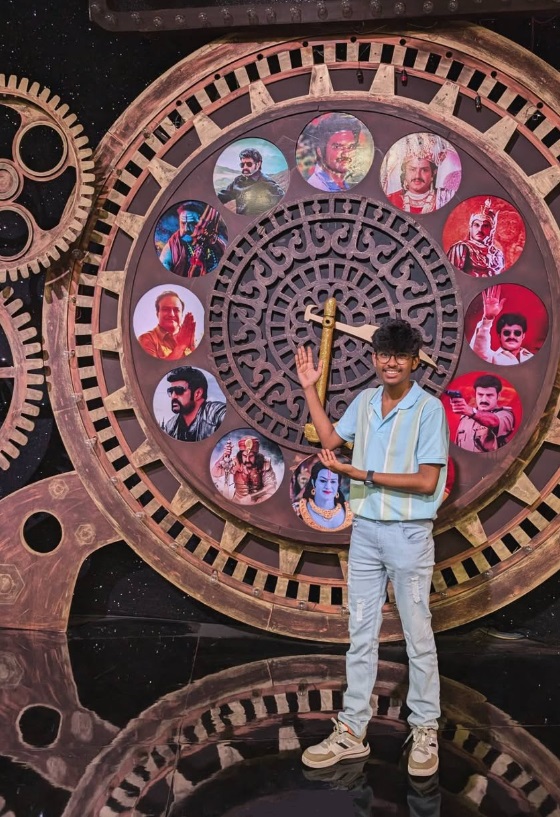
A future filmmaker, Wikki Allada presently documents milestone events and is actively involved in cinema communities and youth-driven film initiatives.
Share Widely